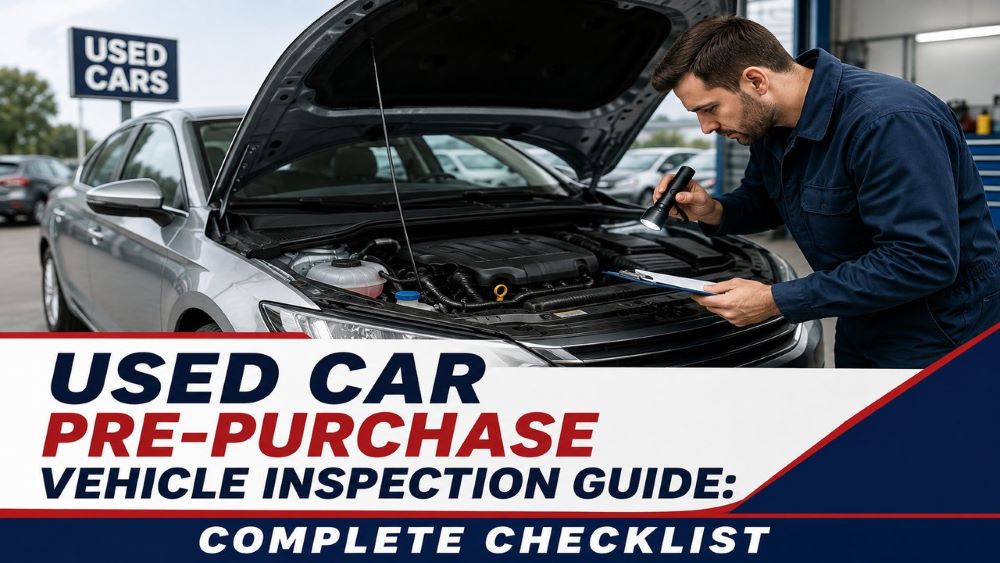
Buying a used car is one of the biggest purchases most Sydney drivers make outside of property, and it’s also one of the easiest to get wrong. Whether you’re inspecting a private sale in Parramatta, a dealer vehicle, or something you’ve spotted at auction, a rushed once-around-the-car look tells you almost nothing about what’s actually going on mechanically. Panels can be repainted, odometers can be misleading, and issues like worn timing components or hidden crash damage are invisible to the untrained eye. A proper vehicle check before buying protects you from purchasing someone else’s expensive problem, and it gives you real leverage at the negotiating table if issues are found. This guide walks through a complete vehicle inspection checklist you can use before handing over a deposit whether you’re doing your own once-over or deciding it’s time to bring in a professional.
Essential Tools & What to Prepare Before Inspecting
Before you start working through your car inspection checklist, a few basics make the process far more effective. Bring a torch for checking under the car and inside the engine bay, a magnet (useful for detecting filler on repaired panels), a tyre tread depth gauge, and a notepad or your phone to record findings against a car inspection sheet. It’s also worth inspecting the car during daylight, on flat dry ground, and ideally before it’s been recently washed a fresh wash can mask fluid leaks and disguise panel repairs. If possible, request the vehicle’s service history, PPSR certificate, and registration papers ahead of time so you can cross-check details on the spot.
Step-by-Step Used Car Vehicle Inspection Checklist
1. Exterior & Body Inspection
Start with a slow walk around the vehicle in good light. Check panel alignment at every gap doors, bonnet, and boot since uneven gaps or panels that sit slightly proud can indicate previous crash repair. Run your hand along panel edges feeling for ripples or inconsistencies in paint thickness, and use a paint depth gauge if you have access to one, as factory paint should read consistently across all panels. Look closely at sills, wheel arches, and door edges for surface rust or bubbling paint, which often signals rust developing beneath the surface. Check that panel colour matches consistently in daylight, as slight variations between panels are one of the clearest signs of a respray following an accident.
2. Under the Bonnet: Engine & Mechanicals
Pop the bonnet and check the condition and colour of the engine oil, coolant, brake fluid, and power steering fluid cloudy, milky, or discoloured fluid can point to internal issues rather than simple age. Inspect drive belts for cracking, glazing, or fraying, and look at hoses for signs of perishing or swelling. Check around the engine, gearbox, and radiator for any signs of leaks or dampness, particularly around gaskets and seals. For turbocharged or performance European vehicles especially, it’s worth checking the cooling system closely, since overheating history is one of the most expensive problems to inherit.
3. Interior, Electrics & Safety Systems
Inside the cabin, turn the ignition to check that all dashboard warning lights illuminate briefly and then switch off correctly lights that stay on, or an airbag light that doesn’t clear, are both red flags worth investigating further. Test every window, the air conditioning, central locking, and any infotainment or driver-assist features to confirm they’re functioning. Check seat upholstery, carpets, and pedal wear for signs of mileage that don’t match the odometer reading, and look underneath floor mats for water staining that could indicate a prior flood or leak.
4. Undercarriage, Brakes, Suspension & Tyres
With the vehicle safely raised or on a hoist, inspect brake rotors for scoring, uneven wear, or excessive rust ridging, and check brake pad thickness where visible. Look at suspension bushings and shock absorbers for cracking, oil weeping, or excessive play, and check for any signs of recent underbody repair or welding that might suggest prior accident damage. Check tyre tread depth and wear pattern across each tyre uneven wear can point to alignment or suspension issues and check the tyre date code (a four-digit code moulded into the sidewall) to confirm the tyres aren’t older than their tread would suggest.
5. The Road Test Assessment
No used car buying checklist is complete without a proper road test. Pay attention to how the transmission shifts, whether automatic or manual hesitation, harsh shifts, or slipping are all concerning. Check that the steering tracks straight without pulling to one side, and test braking feel at both low and higher speeds, noting any vibration, pulling, or unusual noise. Listen for knocks, rattles, or whining from the engine, gearbox, or suspension over varying road surfaces, and if possible, include some motorway-speed driving a stretch of the M4 or Parramatta Road is a good real-world test for how the vehicle behaves at sustained higher speed, which a slow suburban test drive won’t reveal.
Digital Diagnostic Scans & PPSR Checks
A visual and physical inspection tells you a lot, but it doesn’t tell you everything particularly on modern vehicles built around CAN-bus electronics, and especially European models with complex onboard computer systems. Stored fault codes, sensor faults, and electronic module issues often don’t show any visible symptoms yet, but they’re sitting in the vehicle’s ECU waiting to surface after purchase. A proper auto inspection checklist for a modern vehicle should always include a dealer-grade diagnostic scan to check for stored and pending fault codes across the engine, transmission, and safety systems. Alongside this, a PPSR (Personal Property Securities Register) check is essential to confirm the vehicle isn’t recorded as stolen, written off, or still owing finance a step that’s easy to skip but can be financially devastating if missed. At I-Fix Autohaus, our Pre-Purchase Inspection service combines a 130+ point physical inspection with dealer-grade ECU diagnostic scanning, giving Sydney buyers a complete picture that a walk-around simply can’t provide.
When to DIY vs. When to Hire a Professional Mechanic
Knowing how to check used car condition yourself starts with a basic self-inspection using the checklist above a great first filter that can quickly rule out vehicles with obvious problems and save you wasting time on cars that aren’t worth pursuing further. However, once you’re seriously considering a vehicle, a professional pre-purchase inspection is worth the investment, particularly for higher-value, European, or performance vehicles where hidden issues can be expensive to fix. A qualified mechanic has the tools, hoist access, and diagnostic equipment to check things a private buyer simply can’t from ECU fault codes to signs of prior structural repair. If you’ve done your own walk-around and the car still looks promising, that’s exactly the point to book a professional inspection before committing to a deposit.
Conclusion & Final Checklist Summary
Buying used doesn’t have to mean buying blind. Working through exterior condition, engine and fluids, interior electrics, undercarriage and tyres, and a proper road test will catch the majority of common issues but a full diagnostic scan and PPSR check are what separate a surface-level look from a genuinely thorough inspection. For anything beyond a quick personal filter, having a qualified workshop run a complete automotive inspection checklist with proper equipment gives you real peace of mind before you sign anything. I-Fix Autohaus offers a 130+ point Pre-Purchase Inspection with dealer-grade ECU diagnostic scanning and a same-day detailed PDF report, so Sydney buyers know exactly what they’re getting before they buy. It pairs naturally with our Engine Diagnostics service for a deeper look at any concerns raised, and once you’ve bought, our Logbook Servicing keeps your new vehicle in top condition from day one.
Book your pre-purchase inspection today call 1300 010 888 or visit us at 33 Antoine St, Rydalmere NSW 2116.
FAQ
1. How much does a pre-purchase vehicle inspection cost in Sydney?
Costs vary depending on the vehicle type and how comprehensive the inspection is, ranging from a basic visual check through to a full 100+ point inspection with diagnostic scanning. A basic check is better than nothing, but for anything beyond a low-value vehicle, a comprehensive inspection with ECU scanning is worth the extra cost, since it can catch expensive issues like a failing transmission or airbag fault that a purely visual check would miss entirely. At I-Fix Autohaus, our 130+ point inspection with dealer-grade diagnostics and a same-day PDF report is designed to give buyers this level of detail without the guesswork.
2. Can I inspect a used car myself, or do I need a mechanic?
You can absolutely do a basic self-inspection using a checklist to filter out vehicles with obvious problems panel misalignment, fluid leaks, worn tyres, and dashboard warning lights are all things a buyer can check without special tools. However, a private buyer can’t access a hoist, diagnostic scan tools, or paint depth gauges, and won’t have the trained eye to spot subtle signs of prior accident repair. Once you’re seriously considering a specific vehicle, it’s worth having a qualified mechanic complete a proper pre-purchase inspection before you commit, particularly for higher-value or European vehicles where hidden faults can be costly.
3. What’s the difference between a PPSR check and a mechanical inspection?
A PPSR (Personal Property Securities Register) check confirms the vehicle’s legal and financial history whether it’s recorded as stolen, written off, or still has money owing on it but it says nothing about the car’s physical or mechanical condition. A mechanical pre-purchase inspection, on the other hand, physically assesses the engine, body, electrics, undercarriage, and runs a diagnostic scan to check for stored fault codes. Both checks are important and cover completely different risks, so a thorough pre-purchase process should always include both a PPSR check and a proper physical and diagnostic inspection.
