
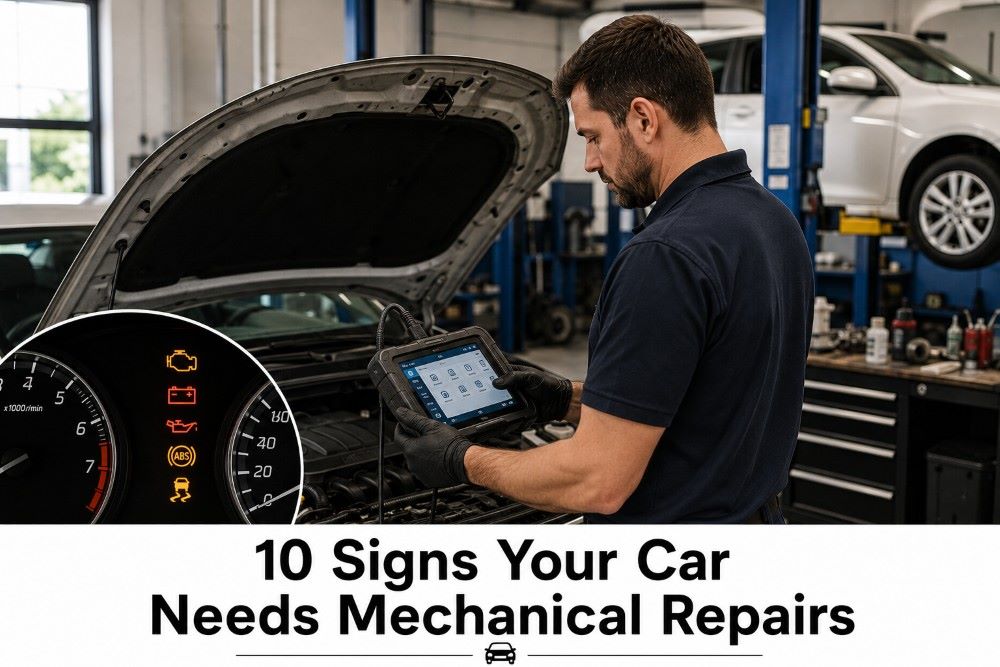
Your car will often show warning signs before a mechanical problem becomes a major failure. A dashboard light, unusual noise, fluid leak or change in handling may be something relatively minor, but it can also indicate a fault that needs prompt attention. Because the same symptom can have several possible causes, it is not always possible to identify the problem from the driver’s seat. A qualified mechanic can inspect the vehicle, carry out appropriate diagnostic testing and explain which repairs, if any, are necessary. Recognising the signs early can help you make a safer decision and avoid replacing parts unnecessarily.
1. Warning Lights Appear on the Dashboard
Dashboard warning lights are one of the clearest signals that your vehicle needs attention. Depending on the vehicle, the light may relate to the engine, oil pressure, cooling system, battery, brakes, ABS, airbags or another electronic system. The owner’s manual should be your first reference because warning-light symbols and meanings vary between makes and models. As a general guide, a red warning light usually calls for quicker action than an amber or orange light. A red oil-pressure, temperature or brake warning may mean you should stop driving as soon as it is safe. An amber engine-management light may allow limited driving in some circumstances, but it should still be diagnosed promptly rather than ignored. NRMA notes that persistent warning lights should not simply be reset, because clearing the message does not repair the underlying fault . If the light is flashing, appears with severe shaking or loss of power, or is accompanied by another serious symptom, treat the situation as urgent. For brake, airbag and engine warning-light concerns, professional inspection is the safest next step.
2. Your Engine Makes Unusual Noises
A new noise from the engine bay deserves attention, particularly if it changes with engine speed or becomes louder over time. Knocking, ticking, grinding, rattling and whining can each have different possible causes, including wear, loose components, belt or pulley concerns, lubrication issues or an exhaust-related problem. Do not rely on the sound alone to identify the failed part. Note when the noise occurs: during cold starts, acceleration, braking, turning or idling. Then arrange an inspection before a small fault develops into more extensive damage. Continuing to drive with a severe metallic knock, loud grinding or rapidly worsening noise may be unsafe.
3. Your Car Is Difficult to Start
Repeated cranking, a clicking sound, slow engine turnover or an engine that starts and then stops can all indicate a starting or electrical problem. Possible causes may involve the battery, charging system, starter motor, fuel delivery, ignition system, sensors or another control module. A single difficult start may be affected by weather or a temporary electrical issue, but recurring trouble should not be dismissed. Rather than repeatedly trying to start the vehicle or replacing the battery without testing, have the starting and charging systems checked. If the symptom is specifically a click, slow crank or intermittent no-start condition, link readers to the existing 9 Signs of a Bad Starter Motor article for more detail.
4. The Engine Is Misfiring or Running Rough
An engine that shakes at idle, hesitates when accelerating, loses power or feels as though it is not running smoothly may be misfiring. You may also notice uneven engine speed, poor response from the accelerator or a flashing engine warning light. A rough-running engine can have many possible causes, from ignition and fuel-system issues to air leaks, sensors or mechanical faults. Avoid treating a general symptom as proof that one particular component has failed. A diagnostic inspection can help identify the underlying cause and prevent unnecessary parts replacement. Link this section to the existing Engine Misfire article so readers can explore the symptom without duplicating the detailed guide here.
5. Your Car Is Overheating
Watch for a temperature gauge that rises above its normal position, a temperature warning light, steam, a strong hot smell or coolant loss. These signs may indicate that the cooling system is not operating correctly, although the exact cause requires inspection. If the temperature rises sharply or steam is visible, find a safe place to stop and switch off the engine. Do not remove a radiator cap while the system is hot, as pressurised coolant can cause serious burns. NRMA’s overheating guidance also advises drivers to pull over safely and allow the engine to cool rather than continuing to drive . Link to the detailed Car Overheating Causes article for further explanation, but keep this pillar page focused on recognising the warning sign.
6. You Notice Fluid Leaks
A fresh patch or drip under the vehicle should be investigated, even if the car still appears to drive normally. Vehicles use several fluids, including engine oil, coolant, brake fluid, transmission fluid and power-steering fluid, where fitted. Their appearance can vary with age, contamination, lighting and the surface beneath the car, so colour alone is not a reliable diagnosis. Take note of where the leak appears, whether it is recurring and whether the fluid level or a dashboard warning light has changed. A leak near a wheel, brake component or tyre is particularly concerning. If the leak is substantial, the fluid level is falling or the vehicle’s braking, steering or temperature changes, avoid driving it and arrange professional assistance.
7. Braking Feels Different
Changes in braking should never be treated as normal wear that can be ignored. Warning signs include grinding or persistent squealing, pulling to one side, steering-wheel vibration during braking, a longer stopping distance or a soft, spongy pedal. These symptoms can involve brake pads, discs, callipers, hydraulic components, tyres, suspension or another part of the braking system. A brake warning light may also appear. If the pedal drops unusually low, braking power is reduced or the vehicle pulls severely, stop driving when safe and seek assistance. Link to How to Know When Your Car Brakes Are Failing for the detailed brake-specific information.
8. Your Vehicle Vibrates, Pulls or Handles Differently
A vehicle that starts vibrating, wandering, pulling or feeling unstable needs inspection. The cause could relate to tyre condition or pressure, wheel balance, alignment, suspension, steering, brakes or a damaged wheel. The symptom may be most noticeable at a particular speed, while cornering or under braking. Check that the tyres do not appear damaged and that pressures are consistent with the vehicle manufacturer’s recommendations, but do not assume a visual check has ruled out a safety issue. If the steering feels loose, the car is difficult to control or the behaviour appeared suddenly after hitting a pothole or kerb, avoid driving it until it has been assessed.
9. You Notice Smoke or Unusual Smells
Smoke, burning smells, fuel odour, an exhaust smell inside the cabin or a strong hot-rubber smell should be investigated. The source could involve the engine, fluids, electrical system, brakes, exhaust or another component, and the correct response depends on the severity and location of the symptom. Heavy smoke, smoke from the engine bay, a fuel smell or an electrical burning smell warrants stopping in a safe place and seeking professional help. Never continue driving simply because the smoke disappears temporarily. For exhaust-related symptoms, link to How to Diagnose White Smoke From Exhaust, while avoiding a definitive diagnosis based only on the smoke’s appearance.
10. Fuel Economy or Performance Suddenly Gets Worse
A sudden increase in fuel use, reduced acceleration, hesitation, poor throttle response or a noticeable loss of power can indicate that the vehicle is not operating as it should. The cause may involve the engine-management system, air or fuel delivery, ignition, tyres, brakes, transmission or another mechanical or electrical system. Record when the change began and whether it occurs during cold starts, hills, acceleration or cruising. Proper diagnosis is more useful than simply replacing a sensor, filter or other part based on guesswork. A workshop can combine the driver’s description with inspection, testing and diagnostic information to determine the most sensible repair pathway.
When Is a Car Problem an Emergency?
Some symptoms mean you should stop driving as soon as it is safe and arrange professional assistance. These include severe overheating or steam, loss of braking, a major fluid leak, heavy smoke, a serious or flashing engine warning light, unsafe steering behaviour, or a vehicle that suddenly becomes difficult to control. Move away from traffic where possible, use hazard lights when appropriate and follow your vehicle manufacturer’s safety guidance. Do not attempt repairs beside the road if doing so would expose you to traffic, hot pressurised fluids or moving components. If you are unsure whether the vehicle is safe to drive, err on the side of getting assistance.
Why Diagnosing the Problem Matters
Finding a symptom is not the same as identifying its underlying cause. For example, poor acceleration might be related to several systems, while a vibration could originate from a tyre, wheel, brake, steering or suspension component. Replacing a part without confirming the cause can waste money and leave the original problem unresolved. A proper inspection may include a visual assessment, a road test where safe, fluid and component checks, electronic diagnostics and targeted testing. At I-Fix Autohaus, the published service process includes an inspection, a transparent quote and work proceeding after approval . This gives the vehicle owner an opportunity to understand the recommended repair before authorising it.
What to Do If You Notice These Warning Signs
Start by noting exactly what you observed and when it happens. Record any dashboard symbols, noises, smells, leaks or changes in performance. Check the owner’s manual for the warning-light meaning, but do not rely on a reset or temporary disappearance as proof that the problem has been fixed. Next, decide whether the vehicle appears safe to drive. If braking, steering, temperature control or engine operation is seriously affected, stop and seek assistance. Otherwise, contact a qualified automotive professional and arrange an inspection. I-Fix Autohaus provides car servicing and mechanical repairs from 33 Antoine St, Rydalmere NSW 2116, supporting drivers from Rydalmere, Parramatta and Western Sydney .
Final Takeaway
The ten signs above do not automatically identify a specific failed component, but they are useful prompts to take your car’s condition seriously. If your vehicle is warning you through a light, noise, leak, smell, vibration or performance change, arranging a professional inspection can help you make an informed decision about the next step. For drivers in Rydalmere, Parramatta and Western Sydney, visit the I-Fix Autohaus Car Servicing & Repairs page to learn more or book an inspection.
Common Questions About Car Repairs
How do I know if my car needs repairs?
A new warning light, unusual noise, leak, smell, vibration, handling change or drop in performance is a good reason to arrange an inspection. Recurring symptoms should not be ignored simply because the vehicle still starts and moves.
What warning lights should I take seriously?
All warning lights deserve attention, but red lights, flashing lights and warnings linked to oil pressure, engine temperature, brakes, charging or airbags may require particularly prompt action. Check the owner’s manual for the exact meaning and seek professional advice if uncertain.
Can I drive my car if the check-engine light is on?
It depends on the light and the vehicle’s behaviour. A steady amber light may permit limited driving in some cases, but arrange diagnosis promptly. If it is flashing or accompanied by shaking, smoke, overheating or significant power loss, stop driving when safe and seek assistance.
Why is my car making a strange noise?
A strange noise may come from the engine, belts, exhaust, brakes, tyres, suspension or another component. The timing and conditions matter, so note when it occurs and have the vehicle inspected rather than guessing the failed part.
Why is my car losing power?
Loss of power can have mechanical, electrical, fuel, air, transmission or control-system causes. Because several faults can produce similar symptoms, testing is important before parts are replaced.
When should I stop driving my car?
Stop as soon as it is safe if you experience loss of braking, unsafe steering, severe overheating, heavy smoke, a major leak, a flashing serious warning light or a sudden loss of control. If in doubt, arrange roadside or professional assistance.
Is it cheaper to repair a problem early?
Early inspection may help identify a developing issue before it causes additional damage, but the cost and outcome depend on the vehicle and fault. Prompt diagnosis is generally more useful than continuing to drive while a symptom worsens.
How can a mechanic diagnose a car problem?
A mechanic may combine your description of the symptom with a visual inspection, road test where safe, electronic scan, fluid checks and targeted mechanical or electrical tests. The goal is to confirm the cause before recommending repairs.
