Introduction
Importance of Injector Cleaning
Every time you start your car, its fuel injectors are working to atomise fuel into a fine mist hundreds of times per minute. Over time especially in stop-start Parramatta traffic or on longer runs along the M4 carbon, varnish, and gum deposits build up inside the injector nozzles. This isn’t a minor issue. Dirty injectors distort the spray pattern, which throws off the air-fuel ratio, strains the engine, and can trigger a cascade of expensive problems if left unchecked. Regular injector cleaning is one of the simplest ways to protect your engine’s long-term health.
Overview of Injector Cleaner Machines
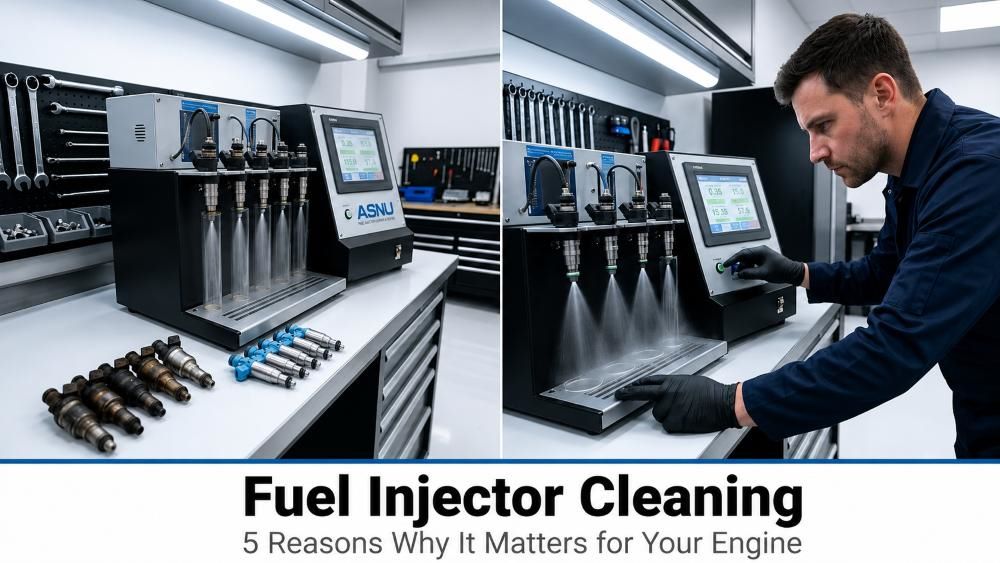
An injector cleaner machine is dedicated workshop equipment designed to clean, flush, and test fuel injectors off the vehicle (or, in some cases, on the vehicle via direct fuel rail connection). Unlike a bottle of fuel additive tipped into your tank, purpose-built injector cleaning equipment such as an ASNU machine physically removes deposits and verifies that each injector is spraying correctly, atomising fuel to the manufacturer’s specification. For Sydney drivers running everything from turbocharged GDI petrol engines to common-rail diesels, this level of precision matters.
What is an Injector Cleaner Machine?
Definition and Functionality
A fuel injector cleaner machine is a bench-mounted or portable diagnostic and cleaning unit that pumps specially formulated injector cleaner fluid through the fuel injectors under controlled pressure, simulating (or exceeding) real engine operating conditions. Technicians use these machines to flush carbon and varnish deposits from injector tips and internal passages, measure and compare spray pattern, flow rate, and atomisation across each injector, and identify a leaking, blocked, or underperforming injector before it causes a misfire or check-engine light. This combination of cleaning and testing is why the better units are often described as a fuel injector cleaner and tester machine rather than a cleaner alone.
Types of Injector Cleaner Machines
Petrol Injector Cleaner Machine Designed for the lower pressures and fluid types used in petrol fuel systems, including direct-injection (GDI) engines that are particularly prone to carbon build-up on the injector tip and intake valves.
Diesel Fuel Injector Cleaner Machine Built to handle the much higher pressures of common-rail diesel systems. Diesel injectors work to extremely tight tolerances, so a dedicated diesel fuel injector cleaner machine with appropriate calibration and fluid is essential using the wrong equipment or fluid can do more harm than good.
There are also motorcycle injector cleaner machine variants and multi-purpose benches that adjust pressure and cycle settings for smaller-displacement engines.
How Does an Injector Cleaner Machine Work?
The Injector Cleaning Process
A professional injector cleaning process generally begins with removal, where injectors are taken out of the fuel rail for off-car “bench” cleaning, or the machine is connected directly to the rail for on-car service. For a deep clean, injectors are then placed in an ultrasonic injector cleaner machine, where high-frequency sound waves agitate cleaning fluid in an ultrasonic bath to dislodge stubborn internal deposits that a simple flush can’t reach. From there, the machine cycles injector cleaner machine fluid through each injector under pressurised flushing, at controlled pressure and frequency, closely mimicking the engine’s actual firing pattern. Testing follows, with spray pattern, atomisation quality, and flow rate checked and compared side-by-side across the full set using purpose-built injector testing equipment. Finally, a good workshop will provide reporting with before-and-after results, so you can see exactly what was cleaned and confirm every injector meets specification.
Role of Injector Cleaner Fluid
The injector cleaner fluid for machine use is a concentrated solvent blend, quite different from the additive you’d buy off a servo shelf. It’s engineered to dissolve carbon and varnish without damaging injector seals, seats, or internal components. Quality fuel injector cleaner machine fluid is a major factor in cleaning outcomes it’s part of why professional, off-car ultrasonic cleaning consistently outperforms DIY bottle treatments for injectors with genuine build-up.
Benefits of Using an Injector Cleaner Machine
Improved Fuel Efficiency
Clogged injectors deliver fuel unevenly, forcing the engine management system to compensate usually by running richer than necessary. Restoring correct spray pattern and flow with proper injector cleaning equipment helps your engine burn fuel efficiently again, which matters on both the daily Rydalmere-to-Parramatta commute and longer Sydney motorway drives.
Enhanced Engine Performance
Rough idling, hesitation, reduced power, and misfires are all classic symptoms of dirty injectors. A thorough clean and test on a fuel injector cleaner tester machine restores smooth combustion, more responsive throttle, and consistent power delivery particularly noticeable in turbocharged and performance-tuned vehicles where injector precision directly affects tuning accuracy.
Cost-Effectiveness
Preventive injector cleaning is significantly cheaper than the alternative: ignoring symptoms until an injector fails outright, damages a catalytic converter, or contributes to costly engine repairs. Scheduling injector servicing alongside your regular logbook servicing is a cost-effective way to catch problems early and keep your vehicle running efficiently for longer.
Choosing the Right Injector Cleaner Machine
Factors to Consider
If you’re comparing an injector cleaner machine for sale whether for workshop use or researching what your mechanic should be using on your car a few factors are worth weighing up. Ultrasonic capability matters for genuinely deep cleaning of internal deposits, while testing accuracy determines whether the machine can measure flow rate and spray pattern rather than simply flush fluid through. Petrol versus diesel compatibility is essential too, since the machine and fluid need to suit your vehicle type. Portability is another consideration a portable injector cleaner allows on-car servicing for certain jobs, though bench-based ultrasonic cleaning generally gives more thorough results for heavily contaminated injectors. Finally, look for equipment (and a workshop) that provides proper reporting with before-and-after data, not just a “done” on the invoice.
Best Injector Cleaner Machines on the Market
Among professional workshops, the ASNU injector cleaner machine is widely regarded as one of the industry benchmarks, valued for its ultrasonic cleaning stage and precise flow-testing capability across petrol and diesel applications. When you’re assessing any car injector cleaner machine, it’s worth asking your workshop directly what equipment and process they use this is the clearest way to separate a genuine ultrasonic clean-and-test service from a basic in-tank additive. At I-Fix Autohaus, our fuel system checks use professional-grade equipment to properly diagnose and clean injectors, rather than relying on generic bottle treatments.
Conclusion
Summary of Benefits
A dedicated injector cleaner machine does what a bottle of additive simply can’t: it physically removes built-up deposits, restores correct spray pattern, and verifies each injector is performing to specification. The result is better fuel efficiency, smoother engine performance, and real cost savings by avoiding bigger repairs down the track.
Final Thoughts on Injector Cleaning Equipment
If your vehicle is idling roughly, using more fuel than usual, or simply due for a service, professional injector cleaning is worth adding to the conversation. Our team at I-Fix Autohaus combines fuel system cleaning with full engine diagnostics, so any underlying issue is identified not just masked. We service petrol, diesel, GDI, and European vehicles for drivers across Rydalmere, Parramatta, and greater Sydney. Book an injector clean and test today call 1300 010 888 or drop into 33 Antoine St, Rydalmere NSW 2116.
FAQ
1. How do I know if my injectors need cleaning?
Common warning signs include a rough or uneven idle, reduced fuel economy, hesitation or stumbling under acceleration, a check-engine light, or a misfire code on diagnostic scan. GDI (direct-injection) petrol engines and high-kilometre diesels are especially prone to carbon build-up. If you’re noticing any of these symptoms, it’s worth booking a fuel system check so a technician can test each injector’s flow and spray pattern on proper injector testing equipment, rather than guessing based on symptoms alone.
2. What’s the difference between an injector cleaning additive and professional machine cleaning?
A bottle additive is added to your fuel tank and relies on the fuel system’s normal operation to slowly work on deposits it can help with mild, early-stage build-up but has no way to clean severely clogged injectors or verify results. A professional injector cleaner machine, particularly an ultrasonic unit like an ASNU, removes the injectors (or connects directly to the rail), physically flushes and ultrasonically cleans each one, then tests and measures spray pattern and flow rate before and after. It’s a diagnostic process as much as a cleaning one, which is why workshops use it to confirm the problem is actually resolved.
3. How often should I get my fuel injectors cleaned?
There’s no single answer for every vehicle it depends on fuel quality, driving conditions, engine type, and mileage. As a general guide, many workshops recommend having injectors checked every 20,000 to 40,000km, or sooner for GDI petrol engines and vehicles doing a lot of stop-start city driving around Sydney and Parramatta. The most reliable approach is to have injectors assessed as part of your regular logbook servicing, so cleaning is done based on actual condition rather than guesswork.
