
Introduction
If you’ve spotted white smoke from exhaust while idling at the lights on Church Street or warming up the car before the school run in Rydalmere, it’s natural to feel a flicker of concern. The good news is that not all smoke out the exhaust spells disaster but some causes absolutely do, and knowing the difference can save you thousands in repair costs. At I-Fix Autohaus, we diagnose smoking exhausts on European and Japanese vehicles every week, from daily commuters battling stop-start Parramatta traffic to weekend tourers tackling the hills around Sydney. This guide walks you through exactly how to read exhaust smoke like a technician does what white, blue, black, and gray smoke actually mean, and what steps to take next.
Understanding Exhaust Smoke
What Does White Smoke from Exhaust Mean?
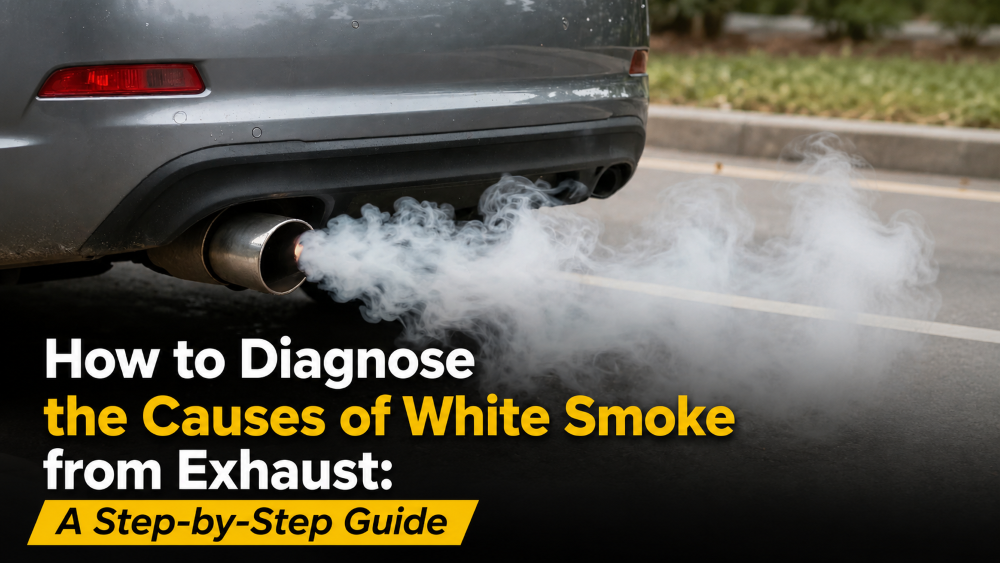
So, what does white smoke from exhaust mean in practical terms? It almost always points to water or coolant entering the combustion chamber and being burned off alongside fuel. In cold weather, a light, wispy puff of white vapour from the tailpipe on startup is simply condensation completely normal and nothing to worry about. The real question is what does white exhaust fumes mean when the smoke is thick, doesn’t clear after a few minutes of driving, and comes with a sweet smell. That combination is a strong signal of an internal coolant leak, and it’s the scenario this guide focuses on diagnosing properly. If you’re wondering what does white smoke from tailpipe mean specifically after the engine has fully warmed up, the answer narrows further: it’s very unlikely to still be condensation, and far more likely to be a mechanical fault worth investigating before you drive any further than necessary.
Differentiating Exhaust Smoke Colors
Not all smoke coming out of exhaust is the same, and colour is your first diagnostic clue.
White Smoke Typically water vapour or burning coolant. Ranges from harmless (cold-start condensation) to serious (head gasket failure).
Blue Smoke from Exhaust Bluish exhaust smoke, especially with a burning oil smell, indicates engine oil is being burned in the combustion chamber. Common culprits behind blue smoke from exhaust pipe include worn piston rings, damaged valve seals, or a failing turbocharger seal. This is a lubrication problem, not a cooling one, and it needs its own diagnostic path.
Black Smoke from Exhaust Pipe Dark smoke from exhaust usually means the engine is running rich, burning excess unburnt fuel. This can stem from a faulty fuel injector, a blocked air filter, or sensor issues (particularly the mass airflow or oxygen sensor) confusing the fuel mixture.
Gray Smoke from Exhaust Gray smoke from exhaust sits in a grey area (quite literally) it can suggest a failing turbocharger, a stuck PCV valve, or in automatic vehicles, transmission fluid being drawn into the engine. It sometimes overlaps in appearance with light blue smoke, which is why a proper diagnostic check matters. Getting the colour right is the difference between a five-minute fix and a misdiagnosed repair bill, which is exactly why our technicians run a full visual and diagnostic assessment rather than guessing from colour alone.
Diagnosing White Smoke from Exhaust
Common Causes of White Smoke
When a car is genuinely smoking white smoke beyond the cold-start norm, we’re typically looking at one of three causes:
1. Coolant Leaks A leaking head gasket, cracked cylinder head, or damaged engine block can allow coolant to seep into the combustion chamber. Once it burns alongside fuel, it produces dense white smoke often with a faintly sweet smell and you may also notice your coolant reservoir running low without any visible external leak. This is the most common serious cause of white smoke from exhaust pipe issues we see on the hoist.
2. Fuel Issues Occasionally, white smoke stems from unburnt fuel or a fuel-water mixture, particularly if the vehicle has recently been refuelled with contaminated fuel, or if injectors are misfiring. This tends to smell distinctly of fuel rather than coolant.
3. Condensation As mentioned, a brief burst of white vapour on a cold Sydney morning especially common in the cooler months around Rydalmere and the Parramatta valley is simply water condensing in the exhaust system overnight. It clears within a minute or two of driving and isn’t cause for concern.
Signs of a Serious Problem
Treat the following as red flags that move you from “monitor it” to “get it checked immediately”:
| Warning Sign | Why It Matters |
|---|---|
| Thick white smoke that persists well after the engine reaches operating temperature | Rules out condensation; points to an ongoing internal leak |
| A sweet smell | Classic sign of burning coolant in the combustion chamber |
| Temperature gauge creeping toward the red zone or fluctuating | Indicates the cooling system is losing efficiency |
| Coolant level dropping consistently with no visible external puddle or leak | Suggests coolant is being burned internally, not leaking outside |
| Rough idle, loss of power, or misfiring alongside the smoke | Coolant contaminating cylinders affects combustion |
| White, milky residue under the oil cap | Coolant is mixing with engine oil |
If any of these accompany the smoke, driving further risks turning a head gasket repair into a full engine rebuild.
Steps to Take When You Notice White Smoke
Immediate Actions
| Step | Action |
|---|---|
| 1 | Don’t panic, but don’t ignore it either. Pull over safely if the smoke is thick or the temperature gauge is climbing. |
| 2 | Check the temperature gauge. An overheating engine combined with white smoke is a stop-driving situation. |
| 3 | Check coolant level (once the engine has cooled). Never open a hot radiator cap. |
| 4 | Smell test. Sweet smell = coolant. Fuel smell = fuel-related. Neither, and it clears quickly = likely condensation. |
| 5 | Avoid topping up and continuing to drive if you suspect a head gasket issue — this can mask the problem while damage continues underneath. |
Long-term Solutions
Once the immediate risk is managed, the smoke needs a proper root-cause diagnosis rather than a guess. This typically involves a cooling system pressure test, a compression or leak-down test, and inspection of the head gasket and cylinder head for cracking. Depending on findings, the fix may range from a straightforward radiator and coolant flush to clear contaminated coolant, through to head gasket replacement or, in more serious cases, cylinder head machining or replacement. Vehicles that are due or overdue for scheduled maintenance are more prone to cooling system failures going unnoticed. Staying current with logbook servicing is one of the simplest ways Sydney drivers can catch a slow coolant leak before it becomes an exhaust-smoking head gasket failure. And if you’re shopping for a used European or Japanese vehicle and want to avoid inheriting someone else’s smoking exhaust problem, a pre-purchase inspection will flag compression issues, coolant contamination, and smoke symptoms before you sign anything.
Conclusion
Recap of Key Points
A light puff of white smoke on a cold start is normal condensation, and it’s nothing to worry about. However, thick, persistent, sweet-smelling white smoke usually means coolant is entering the combustion chamber, most often via a head gasket issue. It’s also worth remembering that blue smoke points to burning oil, black smoke points to a rich fuel mixture, and gray smoke can indicate a turbo or transmission fluid issue. Overheating, dropping coolant, and rough running alongside smoke are signs to stop driving and get the vehicle assessed as soon as possible.
When to Consult a Mechanic
If your car is smoking white smoke beyond a brief cold-start vapour, or if you’ve noticed any of the warning signs above, it’s time for a proper diagnostic check rather than a guessing game. I-Fix Autohaus specialises in diagnosing European and Japanese vehicles for drivers across Rydalmere, Parramatta, and greater Sydney, using proper pressure and compression testing rather than assumptions. Call us on 1300 010 888 to book a diagnostic appointment, or visit the workshop at 33 Antoine St, Rydalmere NSW 2116. Catching a coolant leak early is almost always cheaper and far less stressful than dealing with a blown head gasket down the track.
FAQ Section
What does white smoke from exhaust mean?
It usually means coolant or water is being burned in the engine, often due to a head gasket leak, cracked cylinder head, or engine block damage. A brief puff on cold starts is normal condensation.
What does blue smoke from exhaust mean?
Blue or bluish exhaust smoke indicates the engine is burning oil, typically caused by worn piston rings, faulty valve seals, or a failing turbocharger.
Is it safe to keep driving with white smoke coming out of exhaust?
If the smoke is thick, persistent, and paired with a sweet smell or rising temperature gauge, stop driving and have it inspected. Continuing to drive risks turning a repairable issue into engine damage.
Why is my muffler smoking on cold mornings?
Muffler smoking briefly at startup in cooler weather is typically condensation clearing from the exhaust system — common in Sydney’s cooler months and not a fault on its own.
What’s the difference between white smoke and gray smoke from exhaust?
White smoke generally points to coolant or water; gray smoke can indicate burning transmission fluid or a turbocharger issue, and can sometimes resemble light blue smoke.
