
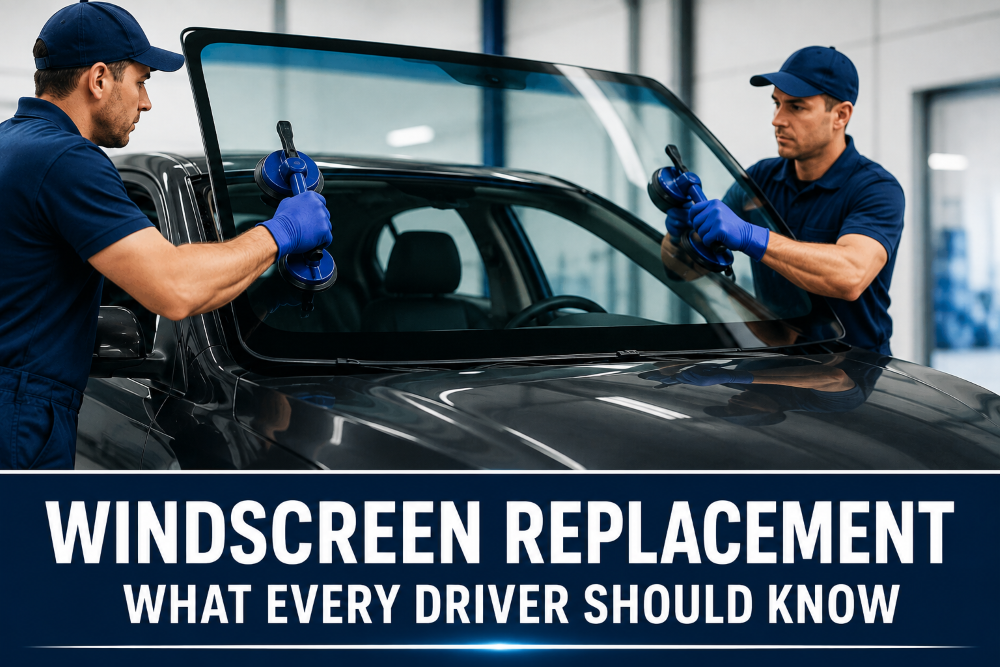
A windscreen replacement isn’t something most drivers think about until a stone chip turns into a spreading crack. But your windscreen is one of the most important safety components on your car, and knowing when it needs replacing (rather than just repairing) can save you money, hassle, and potentially a fine. This guide walks through why windscreens matter, the signs that point to replacement, what influences the process, and how to keep your car safe and roadworthy in the meantime.
Why Your Windscreen Is More Than Just a Window
It’s easy to think of a windscreen as a simple pane of glass. In reality, it plays a structural role in your vehicle.
Built for Strength, Not Just Visibility
Modern windscreens are made from laminated glass, two layers of glass bonded together with a thin plastic interlayer. This construction does two jobs: it keeps the glass from shattering into sharp fragments on impact, and it adds rigidity to the car’s body. In a rollover, a properly fitted windscreen helps support the roof structure. That’s why a poorly installed or damaged windscreen isn’t just a visibility issue, it’s a safety issue.
A Sensor Hub for Modern Cars
Many newer vehicles have cameras and sensors mounted near the rear-view mirror as part of Advanced Driver Assistance Systems (ADAS), used for lane-keeping, automatic braking and adaptive cruise control. This is worth knowing before any windscreen work, as it can affect what’s involved in the replacement process.
Repair or Replace? Knowing the Difference
Not every crack means a full windscreen replacement is needed. The right call usually comes down to size, location and depth of the damage.
When a Repair Is Usually Enough
Small chips or cracks, generally under 20mm and outside the driver’s direct line of sight, can often be repaired with resin injection. This is quicker and cheaper than a full replacement, and it stops the damage from spreading further.
When Replacement Becomes Necessary
Common signs it’s time for a full replacement:
| Sign | Why It Matters |
|---|---|
| Crack longer than 75mm | Especially risky if it reaches the edge of the glass |
| Multiple cracks or a spreading “spider web” pattern | Indicates widespread structural weakness |
| Chip or bruise larger than 15 to 16mm in diameter | Too large for a repair to hold reliably |
| Damage sitting directly in the driver’s line of sight | Safety and visibility concern |
| Damage near the edge of the windscreen | Weakens structural integrity |
| Cracks that have been there a while and picked up dirt or moisture | Contamination prevents a clean, lasting repair |
If any of these apply, a repair generally won’t hold, and the windscreen should be replaced rather than patched.
What Influences Windscreen Replacement
Every job is a little different, and a few factors typically shape how straightforward or involved it is.
Vehicle Make and Model
Windscreen size, curvature and glass type vary between vehicles. A hatchback windscreen is generally simpler to source and fit than a windscreen for a larger SUV or a vehicle with a heated or acoustic-laminated screen.
ADAS Calibration
If your car has a forward-facing camera mounted on the windscreen, it usually needs to be recalibrated after replacement. This ensures safety features like lane departure warnings and autonomous emergency braking continue to work accurately. Skipping this step can leave these systems misaligned.
OEM vs Aftermarket Glass
Original equipment manufacturer (OEM) glass matches the exact specification of the factory windscreen, while aftermarket glass is produced to a similar standard by a third party. Both are legal and safe when installed correctly, but they can differ in price and fit.
How the Windscreen Replacement Process Works
Understanding the steps involved helps set expectations for the job.
Step-by-Step Overview
- Assessment – The technician inspects the damage and confirms replacement is needed.
- Trim and seal removal – Interior and exterior trim is carefully removed, and the old sealant is cut away using a wire or cold-knife tool.
- Old glass removal – Suction tools lift the damaged windscreen out without damaging the surrounding frame.
- Fresh sealant application – A new urethane bead is applied around the frame to create a watertight, structural bond.
- New windscreen fitted – The replacement glass is carefully lowered and aligned into position.
- Curing time – The adhesive needs time to cure, often an hour or more, before the car should be driven.
- Calibration (if required) – ADAS-equipped vehicles have their camera systems recalibrated and tested.
Is It Legal to Drive With a Cracked Windscreen?
Under Australian road rules, drivers are required to have a clear and unobstructed view of the road. A windscreen with cracks or chips that impair visibility can result in a defect notice or fine, and in some cases, it may affect the outcome of an insurance claim if the vehicle is found to be unroadworthy. Even damage outside direct eyesight can worsen quickly with temperature changes, vibration or rough roads, so it’s worth addressing early.
DIY or Professional Job?
While small chip repairs are sometimes marketed as DIY kits, full windscreen replacement is a job that requires the right tools, adhesives and technique. An improperly sealed windscreen can leak, whistle at speed, or fail to provide adequate structural support in a collision. It also affects how airbags deploy in some vehicles, since certain passenger airbags use the windscreen as a brace point. For these reasons, replacement is generally best left to a qualified technician.
Looking After Your New Windscreen
| Care Tip | Why It Matters |
|---|---|
| Avoid slamming doors for the first 24 hours | Pressure changes can disturb the curing adhesive |
| Leave a gap of at least 1cm at the top of a window when closing it | Avoids pressure build-up against the fresh seal |
| Avoid car washes for at least 24 to 48 hours after fitting | Gives the adhesive time to cure properly |
| Watch for whistling noises or water leaks in the days after | May indicate a sealing issue |
Conclusion
A windscreen does far more than block the wind and rain, it supports your car’s structure, houses important safety sensors, and keeps your view of the road clear. Knowing the difference between a repairable chip and a crack that needs full replacement can help you act before a small issue becomes a bigger, more expensive one. If your windscreen shows any of the warning signs above, getting it assessed sooner rather than later is the safest option for you and everyone else on the road.
FAQs
How long does a windscreen replacement take?
Most replacements take around 1 to 2 hours, though the adhesive typically needs another hour or more to cure before the car should be driven.
Can a small chip turn into a crack that needs replacement?
Yes. Temperature changes, road vibration and moisture can cause a small chip to spread, especially if it’s not repaired promptly.
Do I need to recalibrate my car’s safety systems after a windscreen replacement?
If your vehicle has a forward-facing camera for ADAS features like lane-keeping or auto braking, recalibration is usually required to keep those systems working correctly.
Is aftermarket glass as safe as OEM glass?
When installed correctly, both OEM and quality aftermarket glass meet Australian safety standards. The main differences are usually price and exact factory-matched features like tinting or acoustic layers.
What happens if I drive with a badly cracked windscreen?
You risk a fine for driving an unroadworthy vehicle, reduced structural protection in a collision, and the chance of the crack spreading further or obstructing your view while driving.
